Oliebollen
This is a Dutch tradition, though variations on it exist elsewhere, such as
“smoutebollen” in Flanders. Anyway, these are my adaptations of
a recipe published in a ca. 1990 “Allerhande” (which is the
name of a specific Dutch cookie, the word for variety or miscellany, as
well as a monthly cooking & shopping magazine published by Ahold, which is,
incidentally, the owner of Giant) recipe for oliebollen. It’s all in
metric, which you guys should bloody well have adopted by now, anyway, and
the proportions are important, so I’m not even going to attempt
working it out in cups.
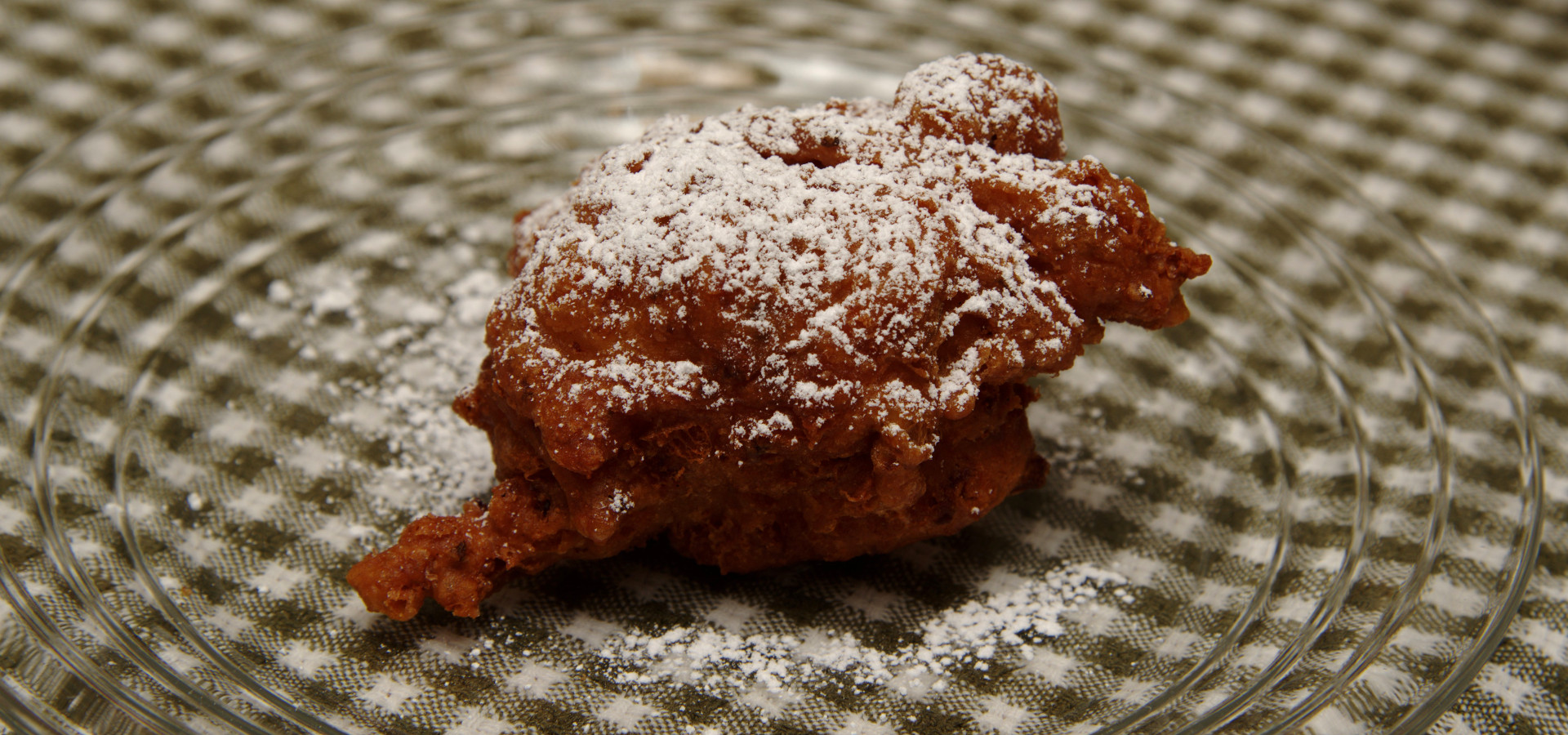
Ingredients
- 500 grams all purpose flour
- 1 tsps salt, preferably non-iodized
- 1 egg, slightly beaten
- 2 envelopes active dry yeast*
- 500-750 mls buttermilk**
- 150 grams raisins (or a mixture of raisins and
currants)
- 100 grams almond paste
- Oil for deep frying
- Confectioner’s (caster for you Brits :-) ) sugar
Notes
About the yeast
I never really bother proofing the yeast since I usually have to get a fresh
jar anyway, but you can if you like.
About the buttermilk
It need not be real buttermilk, OK? I looked for that stuff at Dorsey Hall
Giant and Long Gate Safeway and neither had it, so I improvised. I made a
quart of reconstituted powdered milk and add a scant 1/3 cup white vinegar
to it to make it sour.
In any case, use no more than half of this kind of fake butter milk and
water, or your oliebollen may end up too dark. If you use real buttermilk,
or organic buttermilk from a local goat milked by a macrobiotic hippie or
something, the proportion of milk to water is lower still, 1:3 or so.
Whatever liquid you decide to use, you will probably not need all of it to
make dough. You don’t want it too liquid, or your Oliebollen
won’t fry up properly, but not too dry, either.
Directions
- Put the raisins in a bowl of warm water to plump them while you assemble
the rest of the ingredients.
- Put the flour in a large bowl, and don’t forget that the dough
needs plenty of room rise, or you’re looking at cleaning up a
godawful mess on your counter top. Crumble the almond paste into it.
- Add the salt and stir, add yeast and stir.
- Beat the egg in a separate bowl. (I will need to remember Rosa’s
mother’s trick for adding an eggshell full of water to an egg before
beating it!)
- Pour the raisins into a sieve and pat dry. Use a clean dishcloth to pat
them as dry as possible so you can save a tree. (Possibly a water hogging
Californian almond tree, but that’s neither here nor there). Add them
to the flour mixture and stir briefly.
- Make a well in the middle of the flour (make sure you measure it properly
so it isn’t off by half a millimeter 🙂) and pour in the beaten
egg.
- Once you’ve stirred in as much liquid as it takes (honestly, it can
vary from 500 to 750 ml, depending on ambient temperature and humidity,
the freshness of the flour, whatever), set it to rise for 90 minutes in a
nice warm spot. I like to heat the oven to the lowest temp at the start of
preparing oliebollen, turn it off once it bleeps and use the residual heat
to let the dough rise.
- Meanwhile, heat a neutral vegetable oil (not olive oil, it would burn) to
375 degrees F/190C in a pot that has a close fitting metal lid. I insist on
having both the close-fitting lid and a fire extinguisher on hand when I
deep fry, but that’s possibly because I have an uncle who used to be
an Amsterdam firefighter and he would always tell gruesome stories about
people being away from a deep fryer full of hot oil just a minute too
long...
- Anyway, when the dough has risen (it should about double in volume), take
two large spoons or an ice-cream scoop if you prefer, though that trick has
never worked for me, and scoop a generous spoonful of dough into the batter.
Add no more than 4 to 5 to the oil at a time to avoid cooling it too much.
Fry for 2-3 minutes on each side. Scoop out with a slotted spoon onto paper
towels to soak up excess oil. Serve with powdered sugar
- Keep an eye on the temperature of the oil with a thermometer. It is easy
to OVERHEAT it, which isn’t great for your oliebollen, but could under
certain conditions ignite the oil. The gods avert such plague, but should
this happen, turn off the burner AND the range hood immediately, carefully
slip the lid on the pan (do not use a glass lid!) to deprive the flames of
oxygen, and have the extinguisher at the ready. NEVER EVER POUR WATER ON
BURNING OIL!
Nicoline Smits
